
DEI for Me but not for Thee
DEI for Me but Not for Thee1
Many of you will be happy to know that diversity, equity, and inclusion training is alive and well at least one Ohio campus. I received an email back in September informing me that YSU would be offering training that is "designed to provide faculty, staff and select graduate students with a baseline knowledge about YSU's LGBTQ+ population, culture, barriers this population often faces, and resources available on and off campus."
Wait, sorry, my mistake. The actual training that was advertised was created to:
provide faculty, staff and select graduate students with a baseline knowledge about YSU's Student Veteran and Military population, military culture, barriers this population often faces, and resources available on and off campus.
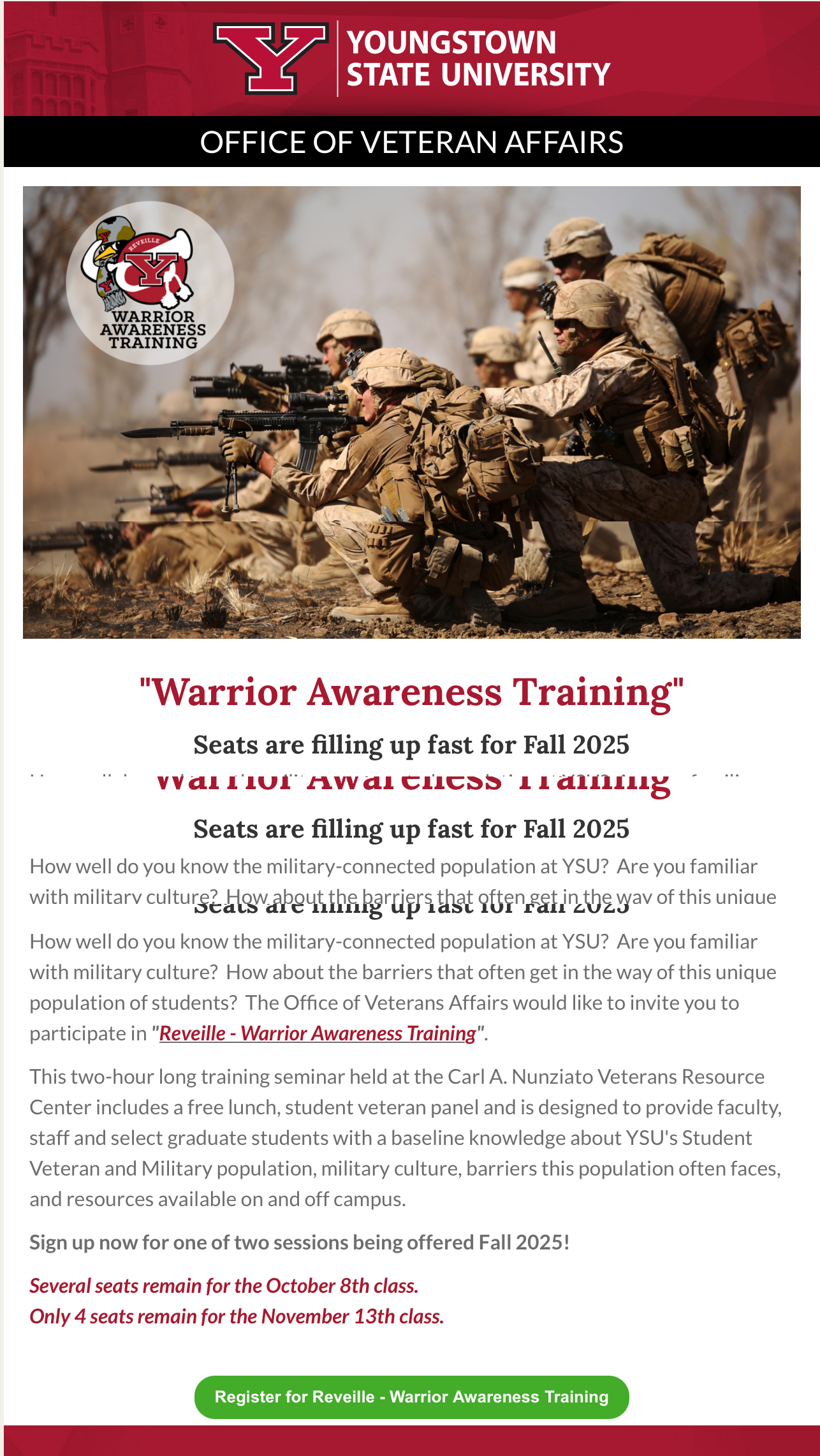
It seems here at YSU we are fine with diversity, equity, and inclusion, so long as it includes the groups we like (or perhaps excludes those we dislike).
For the record, I am not against this type of training, but I am against arbitrarily choosing to care about one group and not others. If we are going to offer training to help faculty understand the needs of returning veterans, then we should also be able to offer training that helps faculty understand the challenges facing first generation college, minority, and LGBTQ+ students.
Needless to say, I was curious as to why this training did not violate SB1. When I emailed the administration with this question, I was told: "Dr. Vopat, our Warrior Awareness Training is in full compliance with the Ohio Revised Code (ORC). Thank you for your inquiry."
As a former professor of mine was fond of noting: "saying it don't make it so." Not satisfied with this response, I decided to move up the chain of authority.
I emailed the Ohio Department of Higher Education (ODHE) SB1 Team in Columbus to ask for clarification. They informed me that it was not their responsibility to determine what training programs were in line with SB1, and which were not:
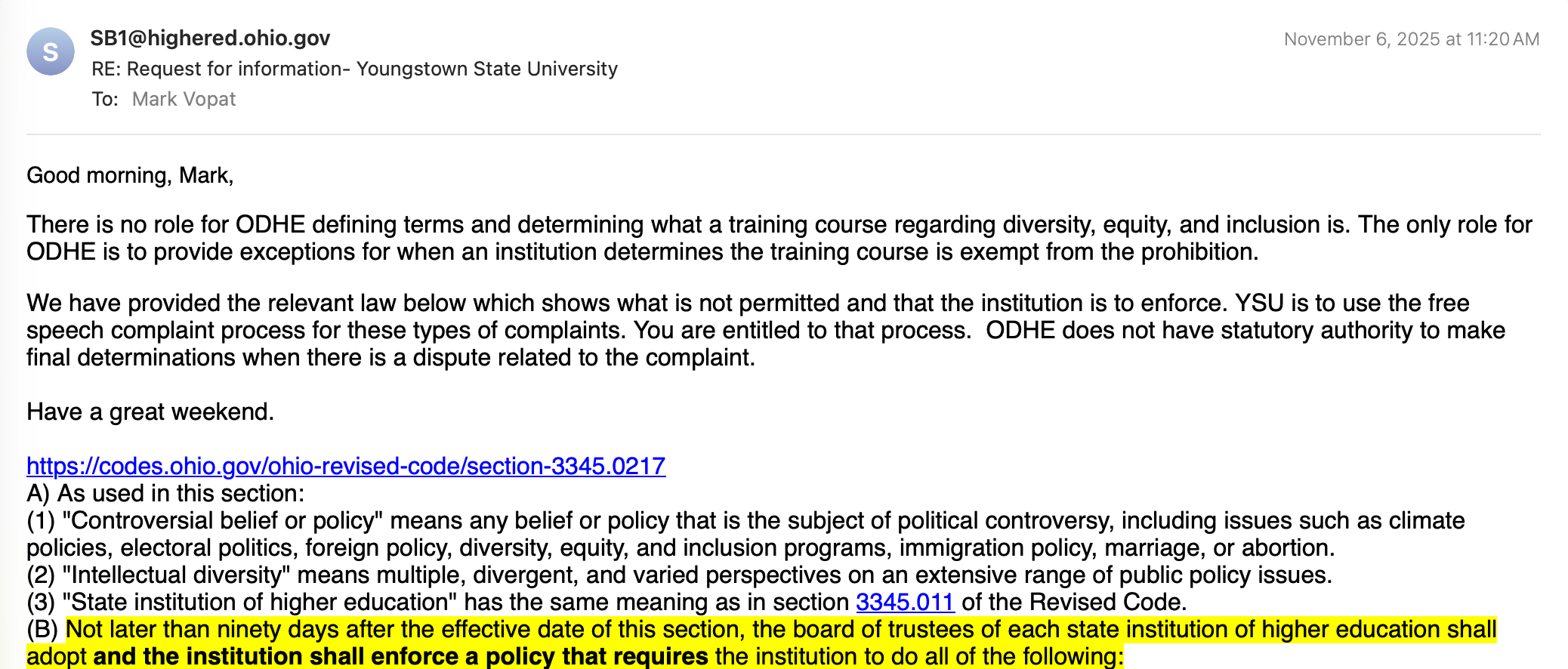
Similarly, it turns out that the Attorney General's Office does not determine who is in violation of SB1 either. Furthermore, they do not respond to inquiries about possible violations of the law:
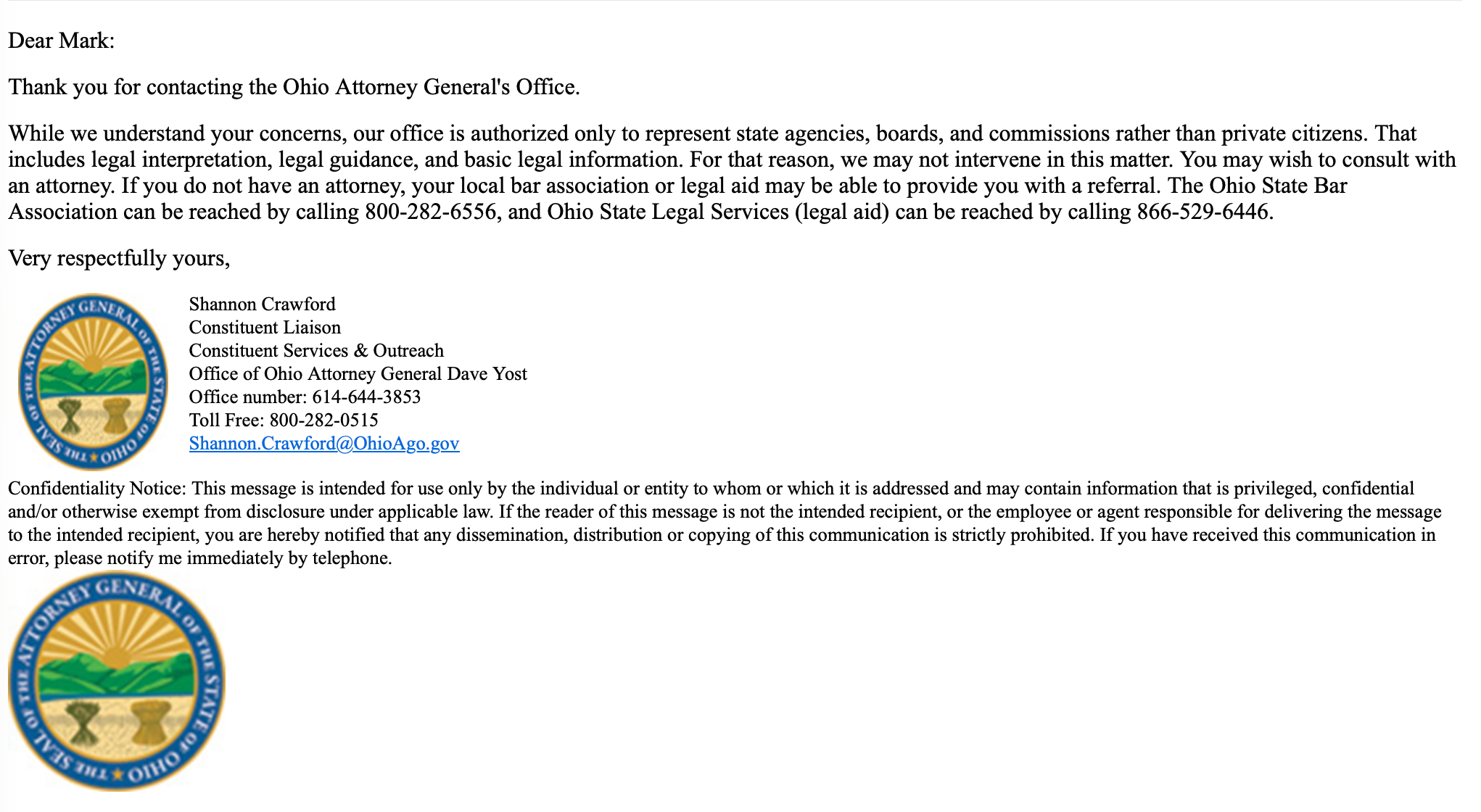
According to them, my only recourse would be to get a lawyer and sue the university.
So, to summarize. If you suspect there is a violation of SB1, you can ask the university whether it is violating the law. If they say they are not violating it—but you think they are—you can file a complaint with them. Since neither the ODHE SB1 Team, nor the Attorney General's Office seem to have a role), the university will then investigate itself and decided whether it is violating the law. Finally, you can demand compliance, but only if you get an attorney and sue the university. For what? Apparently, for violating a law no one is responsible for enforcing.
-
Cudos to D.J. Byrnes, an Ohio Political blogger who used this phrase while noting the hypocrisy of Rep. Josh Williams who benefited from DEI/affirmative action while also endorsing SB1. https://www.rooster.info/ ↩


